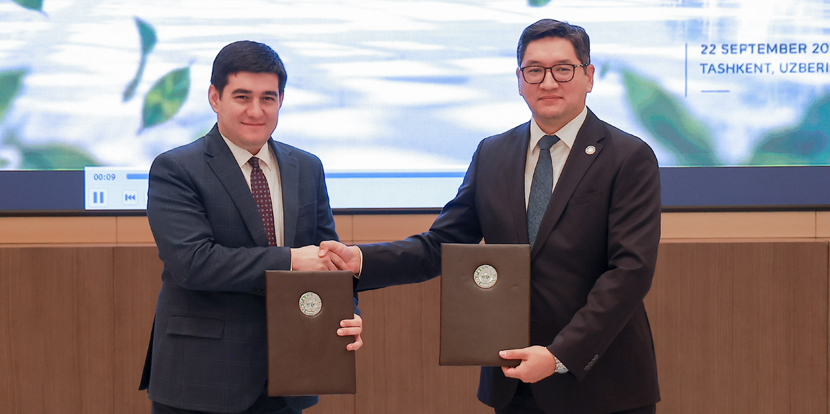
TASHKENT, UZBEKISTAN – 22 September 2026. The National Agency for Social Protection under the President of the Republic of Uzbekistan (NASP), the Ministry of Agriculture of the Republic of Uzbekistan and the Food and Agriculture Organization of the United Nations (FAO) have officially launched a new joint project aimed at supporting the social integration and employment of persons with disabilities through adapted greenhouses.
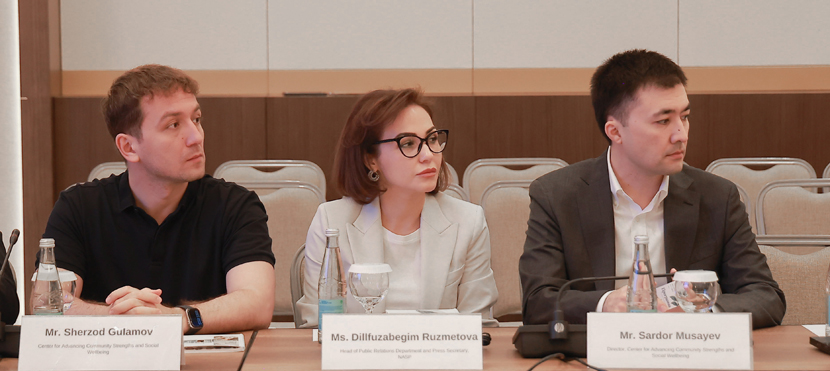
The project document was signed at a high-level event held in Tashkent. The event was attended by Usman Sharifkhodjaev, Deputy Director of the National Agency for Social Protection; Sabine Machl, United Nations Resident Coordinator in Uzbekistan; Nuriddin Kushnazarov, Adviser to the Minister of Agriculture of the Republic of Uzbekistan; and Sherzod Umarov, Deputy FAO Representative in Uzbekistan, as well as representatives of relevant ministries and agencies, specialized educational institutions, organizations of persons with disabilities and development partners.
 The project will be implemented over 24 months at six specialized educational institutions in Tashkent city, Tashkent region, Almalyk, Fergana and Samarkand. It will focus on adapting existing greenhouses for use by persons with disabilities, supporting participants throughout the full production cycle of crop cultivation, and transforming the experience gained into a practical model that can be applied nationwide.
 At the same time, greenhouse farming provides opportunities to develop vocational skills and create sources of income in rural areas. However, narrow pathways, ground-level growing areas, high thresholds and manually operated irrigation systems prevent many persons with disabilities from participating equally in education and employment activities.
The new project addresses these challenges through the “SmartGreen Inclusion” model. At each pilot institution, agronomic conditions and accessibility will be assessed, after which greenhouse solutions will be developed in line with the specific characteristics of the facility and the needs of participants. The feedback of persons with disabilities and pilot institutions will form an important part of the project’s decision-making process.
“Support for persons with disabilities should not be limited to social services alone. It is important to create the necessary conditions for them to realize their professional potential, earn a sustainable income and participate equally in economic life. This project brings together adapted infrastructure, practical skills and employment opportunities within a single model, creating a foundation for scaling it to other regions,” said Usman Sharifkhodjaev, Deputy Director of the National Agency for Social Protection.
The project is designed to address three important gaps in Uzbekistan: the absence of a national standard for designing adapted greenhouses; the lack of an agricultural education model tailored to the needs of persons with disabilities; and the lack of practical, tested pilot experience that could support wider implementation.
Based on the experience gained at the pilot institutions, a tested national standard for the design of adapted greenhouses, as well as a set of practical tools for scaling up this approach through the regional branches of the National Agency for Social Protection, will be developed. Monitoring and data collection are planned to be carried out by sex, type of disability and pilot site.
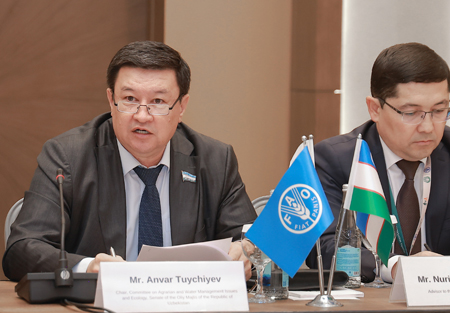 “Agriculture should create opportunities for every person. By bringing together FAO’s technical expertise, the institutional capacity of the National Agency for Social Protection and the sectoral expertise of the Ministry of Agriculture, we will pilot a practical, scalable solution tailored to the needs of persons with disabilities. As a result of the project, not only adapted greenhouses will be established, but also a national standard, an adapted education model and practical tools for applying this experience in other regions,” said Sherzod Umarov, Deputy FAO Representative in Uzbekistan.
 As part of the official launch, the partner organizations discussed priority activities for the first six months of the project, the responsibilities of the parties, coordination mechanisms and key timelines. Work also began on agreeing the schedule for the initial assessment of the six pilot sites, as well as arrangements for monitoring, reporting and data exchange.
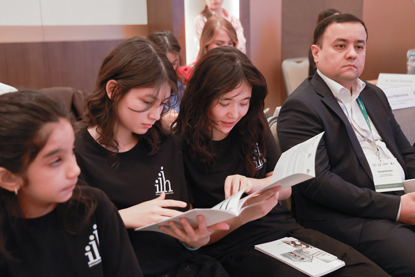
The event programme also featured the exhibition “See My Ability: Talents and New Opportunities,” showcasing creative works by learners of International Inclusive Hub, as well as the inclusive artistic performance “The Garden of ‘Wrong’ Flowers,” presented by 17 participants. The programme highlighted the abilities and dignity of every person and their right to equal participation in society.
“Too often, social protection, agriculture, education and employment are addressed in isolation — but people do not experience their lives through separate institutional mandates. This initiative brings these systems together around the person, creating a practical pathway to skills, decent work and greater independence for persons with disabilities in Uzbekistan. For the United Nations, it is a concrete expression of our commitment to leave no one behind,” said Sabine Machl, United Nations Resident Coordinator in Uzbekistan.
TCP/UZB/4101 – “Promoting Social Inclusion and Employment of People with Disabilities through Accessible Greenhouses” is a joint initiative of the National Agency for Social Protection under the President of the Republic of Uzbekistan, the Ministry of Agriculture of the Republic of Uzbekistan and FAO. The project aims to expand the economic opportunities of persons with disabilities by bringing together adapted infrastructure, practical agricultural education and institutional mechanisms.