(English) One of the Most Efficient Banks in Serving Corporate Clients

4/2025

Bunaqa til mavjud emas “Ingliz (Amerika)”. For the sake of viewer convenience, the content is shown below in the alternative language. You may click the link to switch the active language.

 
     As key players in the financial market, banks play an important role in supporting the country’s economy and the well-being of its population. Therein, JSC “Octobank” concluded 2025 not only with strong financial results but also as a year of sustainable management, digital innovations, and strengthening international trust.
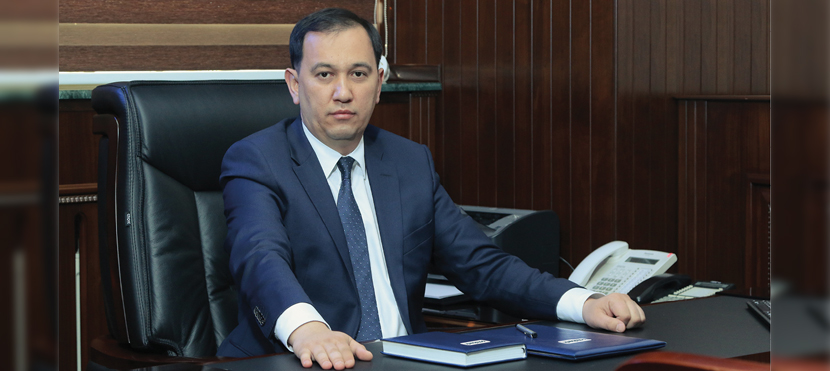
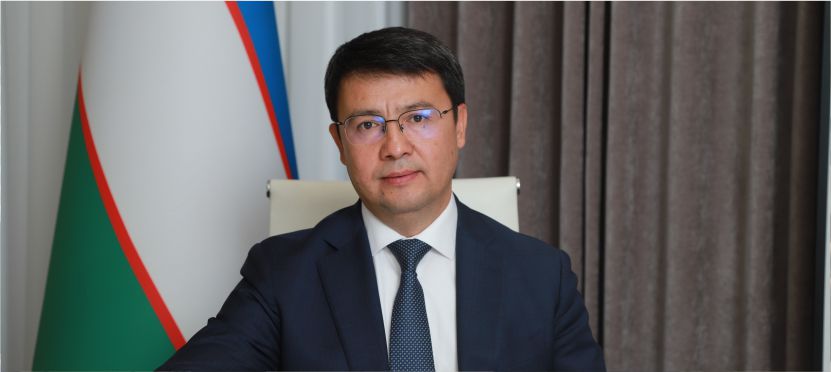
     We spoke with Iskandar TURSUNOV, Chairman of the Board of Octobank, about the bank’s current success, factors of sustainable growth, and its strategic approaches.
 
     – Iskandar Bakhtinurovich, what economic achievements did our republic accomplish in 2025? Which aspects of financial stability, investment flows, and real sector dynamics can be considered the main successes of the year?
     – 2025 was one of the most successful periods for the Uzbek economy in recent years. This year, the highest economic growth since the 2017 economic transformation phase is expected to be recorded – approximately 7.5 per cent. This growth has also been considerably more robust in terms of quality compared to previous years.
     Against the backdrop of reforms in the country’s energy sector, the steady decline in inflation has emerged as a significant positive outcome. According to the Central Bank’s forecasts, inflation is expected to be around 7.3-7.5 per cent by the end of the year. This is the lowest figure in recent years and indicates an approach to the medium-term 5 per cent inflation target.
     The real sector also showed steady growth: by the end of the third quarter, industrial production had increased by 6.7%, construction by 14.7%, and foreign trade turnover by 21.5%. The rapid growth in export volumes, as well as the increase in the inflow of foreign direct investment, demonstrated the growing openness and investment attractiveness of the economy.
     Moreover, the favourable conditions in the raw materials markets, particularly the rise in the price of gold, supported economic activity. This expanded budgetary space and provided an additional impetus for economic growth.
     – What was the competitive dynamic between state-owned and private banks in 2025? What new strategies did banks adopt in terms of service quality, innovation and customer engagement?
     – 2025 marked a new phase in the digital transformation of Uzbekistan’s banking system. While there were 832 bank branches at the start of 2023, by mid-2025, this number had been reduced to 288. This indicates a shift from the traditional model of banking services to digital ecosystems.
     Traditional branches are being replaced by self-service devices and 24/7 digital outlets. Private banks have played a leading role in shaping this trend.
     At the same time, the relationship between state and private banks can be described not as a competition, but as competitive cooperation across different segments. Each type of bank has its own customer base and business model.
     In 2025, the transformation of state-owned banks remained on the agenda. The financial performance of some major banks improved, boosting their investment appeal. This lays the groundwork for attracting additional capital through the capital markets in the future.
     New products and services have become crucial in competing for customers. Offering discounts for payments with bank cards on public transport, the introduction of digital solutions in microfinance and retail lending, and comprehensive marketing strategies have become means of differentiation among banks.
     Overall, 2025 was a year focused on deepening digitalisation, data analytics, and the use of artificial intelligence for the banking sector.
     – Why did global gold prices skyrocket in 2025? What decisive role did geopolitical risks, instability in international financial markets, or other factors play?
     – 2025 was an exceptionally active year for gold in global financial markets. Since the start of the year, the price of gold has risen by more than 60 per cent, trading at around 4,350 US Dollars per ounce. This rise can be explained by several economic factors. With uncertainty persisting in global financial markets, investors have increased their interest in highly liquid, low-risk assets. Gold, as a classic safe-haven asset, has become even more popular.
     The diversification of reserves by central banks and the increased allocation to gold also exerted additional pressure on the price rise. At the same time, inflationary risks and expectations regarding interest rates directed investors towards long-term value-preserving assets.
     In Uzbekistan, gold has also become an attractive investment vehicle for private individuals. The significant rise in the price of bullion has intensified demand for it among the population.
     Many analysts do not rule out gold prices moving onto a relatively stable trajectory in the coming years. However, with global economic uncertainty remaining, interest in gold could stay high.
     – What was the key to Octobank’s success in 2025? What could you say about the bank’s most significant financial and strategic achievements?
     – 2025 was a year of significant development for Octobank. By the end of the year, this period can be characterised as a year of efficiency for the bank, rich in strategic and financial developments.
     As of the end of the fourth quarter, the bank demonstrated significant growth across all key indicators. In particular:
     ● Bank assets grew by 286% compared to the same period last year, reaching 12.2 trillion soums;
     ● Total capital increased by 35% to exceed 1.0 trillion soums;
     ● Net profit grew by 70% to approximately 256 billion soums.
     These results demonstrate that Octobank is strengthening its position in the Uzbek financial market. During 2025, the loan portfolio grew by 160%, while the deposit portfolio grew by 473%. Currently, our bank is chosen by over 3.6 million individuals and nearly 3,000 corporate clients.
     2025 was not only a year of financial achievements but also a year of strategic breakthroughs. New lines of business were introduced to diversify our operations, which became a key factor in the bank’s sustainable development. The increase in customer trust, along with a significant rise in both the number and quality of our clients, is also one of te most impoertant achievements of the year.
     We also succeeded in further expanding our cooperation with international financial organisations. This not only enhanced the bank’s institutional capacity but also strengthened its level of integration into the global financial market.
     – Despite a highly competitive environment, Octobank has achieved sustained growth. What is your opinion, what key factors and strategic approaches have driven this growth?
     – It can be said that competition in the banking services market is intensifying by the day. Not only traditional banks but also the active entry of fintech companies is demanding that the solutions offered to customers be even faster, more convenient and more digitised.
     Recently, our President, Shavkat Mirziyoyev, set out the key target indicators for the development of the financial technology sector for 2026–2030. Under this, the implementation of an ‘open banking’ system is envisaged by September 2026. This will help to ensure the secure exchange of data between banks and payment systems. As a result, the customer is the only one who wins. Furthermore, the aim is to attract $1 billion in foreign investment to start-ups. The number of fintech market participants is expected to reach at least 200.
     Under these conditions, Octobank is steadily strengthening its position. Our primary priority is the consistent implementation of new technologies and modern fintech solutions. This primarily has a positive impact on the speed and quality of our services. Octobank strives not only to introduce innovative solutions to the financial market but also to stay one step ahead.
     In the current era, an individual approach to customers is also extremely important. Octobank regards this as one of its key priorities. Therefore, we are placing particular emphasis on offering banking services in a way that is convenient, clear and purpose-driven for our customers.
Furthermore, taking our relationships with partners to a new level also forms an important part of our development strategy. These partnerships allow us to introduce new directions, thereby steadily enhancing our market position.
     Octobank will continue to develop these principles, building upon them as the foundation for its growth.
     – In the first half of the year, Octobank received ratings from the international agencies Moody’s and S&P Global Ratings. In addition, it took part in a number of prestigious forums. What do you think, how will these results affect the bank’s development and its relationships with international partners?
     – Octobank’s achievements over the past year clearly demonstrate the bank’s strategic development and its active participation in international cooperation. The assignment of a long-term international credit rating of ‘Stable’ by Moody’s and S&P Global Ratings has confirmed our financial stability and reliability on a global scale.
     As I’ve already mentioned, the bank’s key indicators are also growing at a high rate: assets, capital, the loan portfolio and the customer base are steadily expanding. Innovative projects such as PreApproved microloans, integration with the Alipay+ payment system, collaboration with IT Park and digital solutions are creating new opportunities for businesses and start-ups, deepening the integration of technology and finance.
     Our international presence is also expanding. The financial exhibition in Shanghai and our collaboration with CIPS (the system for international yuan payments between countries and banks) secure our leading position in regional cooperation.
     Participation in SIBOS in Frankfurt am Main, Germany, was an important step in demonstrating our strategy to the global banking community and opening up new avenues for partnership. At the SIBOS (SWIFT International Bank Operations Seminar) forum, Octobank participated alongside over 11,000 attendees and nearly 200 exhibiting companies from around the world, including global banks, fintech, regulators and investors.
     Achievements in the fields of branding and technology are also of great importance. While the Brand Awards International accolade strengthens our standing in the market, the ‘Best E-com Acquirer’ and ‘Crypto-Linked Card Launch’ awards from Visa once again confirm the bank’s leadership in e-commerce and digital assets.
     In short, these achievements present Octobank not only in Uzbekistan but also on the international financial stage as a reliable, stable and innovative institution, further expanding opportunities for development and cooperation.
     – What do you think, how should capital and risk management be balanced for a bank to achieve long-term stability?
     – Achieving long-term stability for a bank depends on several factors. One of these is capital adequacy, and Octobank has more stable indicators in this regard. Over the past year, total capital has increased by 35% to exceed 1.0 trillion soums.
     Despite being a rapidly growing bank in terms of figures, we strive to maintain a constant balance and prevent risks. Data on capital adequacy, liquidity, risk management, compliance and business diversification are continuously analysed and stress tests are conducted. In this, the role of experienced, young and dynamic specialists is crucial. For this reason, we constantly strive to attract the best talent to our banking team.
     – How was the Octobank’s risk management system developed in 2025? What impact did the updated risk models or stress tests have?
     – 2025 marked a qualitative new phase in risk management for Octobank. In line with updated regulatory requirements, we reviewed our internal regulatory framework, risk models and business planning requirements.
     The main focus was on deepening stress testing. Alongside macroeconomic scenarios, portfolio-specific risks were also taken into account. This approach enabled us to identify risk concentrations in advance and build up reserves before asset quality deteriorated.
     In retail lending, updated scoring models demonstrated high predictive accuracy. As a result, despite the introduction of new credit products, the Cost of Risk remained at an acceptable level against a backdrop of portfolio growth.
     At the same time, the bank is developing ESG risk management and compliance oversight as a priority. This approach, in line with international best practices, lays the foundation for long-term sustainable growth.
     Prudential indicators also confirm the effectiveness of the chosen strategy: as of 1 December 2025, the capital adequacy ratio stood at 28.2 per cent, well above the prescribed norm of twice the required level. Adequate reserves are also maintained under other capital and liquidity norms.
     – What is your opinion on the integration of automation and digital platforms into workflows, and in the context of Presidential Decree No. PF–246 of December 10, 2025, and the cashless payment policy, what tangible impact have these digital solutions had on the bank’s operational efficiency, speed, and quality of customer service?
     – Today, digital transformation and technological innovations play a crucial role in the strategic development of the banking system. While the core product of the banking system is money, this is shifting from a physical to a digital form.
     In the first half of 2025, only 19 per cent of funds received on bank cards in Uzbekistan were withdrawn as cash. By contrast, in 2020, this figure was close to 40 per cent. Similarly, the share of cash in circulation in the total money supply is also decreasing. This indicates that demand for cash among the population is falling, and there is greater use of digital payment methods.
     Including the target set out in Presidential Decree No. PF–246 of 10 December to reduce the share of the shadow economy to 1 per cent by 2030, goals such as reducing the share of the shadow economy by 3 times and increasing the share of cashless payments in the trade and service sectors to 75 per cent serve as a clear roadmap for Octobank, and the bank is implementing these reforms through digital payments, is actively participating through digital payments, automated services and innovative platforms.
 
 
You can read the whole interview in the printed version of the magazine.

DO'STLARINGIZGA TAVSIYA ETING

Fikr bildirish

Email manzilingiz chop etilmaydi. Majburiy bandlar * bilan belgilangan

  • АФИША

  • PR

  • JURNAL SONLARI ARXIVI

  • Bog’lanish

    O’zbekiston, 100000, Toshkent sh., Oloy , 1

  • Obuna bo’lish

    Obuna bo'lish uchun o'z e-mailingizni kiriting
  • Любое воспроизведение или использование выдержек из публикаций может быть произведено только с письменного согласия редакции; при перепечатке материалов обязательна ссылка на источник.