Извините, этот техт доступен только в “English”. For the sake of viewer convenience, the content is shown below in the alternative language. You may click the link to switch the active language.
In recent years, Uzbekistan has been implementing a large-scale program of economic and financial reforms aimed at modernizing the banking system, developing financial infrastructure, increasing transparency, and creating a favorable investment climate.
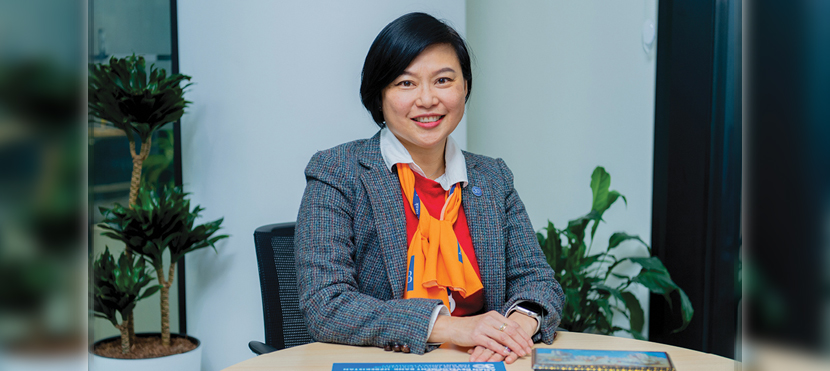
The Asian Development Bank is one of the country’s key international partners, providing financial and expert support for reforms and projects in energy, transport, social infrastructure, and sustainable development. The Economic Bulletin of Uzbekistan presents an exclusive interview with Kanokpan LAO-ARAYA, Country Director of the Asian Development Bank in Uzbekistan.
– How do you assess the current stage of reforms in Uzbekistan’s financial sector? What key changes in the banking and financial infrastructure, in your opinion, have played the greatest role in improving the investment climate?
– Over the past eight years, Uzbekistan’s financial sector has achieved significant progress, driven by a comprehensive reform agenda that includes currency liberalization, rapid expansion of digital finance and banking, the introduction of regulatory sandboxes for capital markets, and improvements in governance. The system remains bank‑dominated, though state participation is gradually declining: by the end of 2025, state‑owned banks accounted for about 65% of sector assets and capital, down from 86% in 2019. This shift reflects ongoing privatization and governance reforms that create space for greater private sector competition.
Capital market reforms, also supported by the Asian Development Bank (ADB), led to an increase in corporate bond issuance to about 326 million USD and attracted 948,000 retail investors, showing a growing interest toward capital markets as an alternative to bank loans and deposits. We are glad to note that Uzbekistan Mortgage Refinancing Company, established to provide a long-term liquidity to banks and supported by ADB, has become the country’s largest corporate bond issuer, with close to 100 million USD in bonds issued, actively leveraging the capital market to support housing finance. A major milestone in 2025 was ADB’s first-ever offshore issuance of Uzbek-sum‑denominated bonds in June, raising 312 billion UZS (around 24.7 million USD) followed by a second issuance in December of 239.8 billion UZS (around 20 million USD) to support women-owned enterprises and micro and small businesses.
However, the use of capital markets instruments for business financing remains limited, with stock market capitalization at only 15–16% of GDP and marginal participation from institutional investors such as insurance companies and the pension fund. We expect the Presidential Decree on Additional Measures to Improve the Investment Climate in Capital Markets, adopted on 18 December 2025, to accelerate market development by expanding instruments, such as dual listing and foreign-currency bonds, improving investor access, and strengthening regulatory frameworks. ADB is now in discussions with the Government of Uzbekistan to get necessary arrangements to allow ADB issue bonds locally. This will help to mitigate currency risks for the borrowers, attract new international investors and support the capital market development,
Moving forward, deepening and sustaining reform will require accelerating commercialization of state-owned banks while reducing state’s footprint in finance and directed lending, continuing strengthening prudential regulation and supervision with addressing regulatory gaps in asset classification and capital requirements, expanding non-bank financial services such as microfinance and further developing capital markets to provide diverse, long-term funding options for businesses and infrastructure. These will be critical for unlocking private investment and embedding inclusive, sustainable development in Uzbekistan.
– ADB actively supports inclusive finance and microfinance sector reforms in Uzbekistan. In your opinion, how effective are these measures in expanding access to finance for MSMEs and vulnerable groups?
– Expanding access to finance for micro, small, and medium-sized enterprises (MSMEs) and vulnerable groups is critical for inclusive growth, and Uzbekistan has made notable progress in this area. Through its Inclusive Finance Sector Development Program, ADB has provided 100 million USD to be channeled to MSMEs via selected banks and microfinance organizations, helped introduce key policy measures to expand the microfinance sector, update microfinance regulation, improve consumer protection, and enhance digital financial supervision. A major milestone is the structural upgrade of microfinance–necessary regulations are put in place for a new type of financial institution—a deposit-taking microfinance bank which will have a strong focus on supporting income generating projects. In 2025, two preliminary licenses were already issued, and hopefully they will be transferred into full-fledged licenses in 2026. Through its Subprogram 3 of the Inclusive Finance Sector Development Program, ADB will continue supporting Uzbekistan with reforms in 2026–2027 by providing policy advice and technical assistance to make financial services more accessible, affordable, and transparent, particularly for underserved communities.
To complement sovereign operations, ADB deploys its private sector lending to help close financing gaps for MSMEs. We have extended local‑currency loans of about 625 billion UZS (around 50 million USD) each with Ipak Yuli Bank and Hamkorbank, with dedicated allocations for women-owned businesses and green investments. These loans expand medium-term Uzbek som financing beyond Tashkent, where access is most constrained. In addition, ADB’s 50 million USD convertible loan to Sanoat Qurilish Bank (SQB) supports privatization and expansion of MSME lending at a major state-owned bank transitioning to universal banking, helping crowd‑in private capital and diversify portfolios toward underserved clients.
The impact is already visible: Liberalization of the microfinance sector has driven significant growth, increasing the number of institutions from 82 in 2023 to 130 by November 2025, operating through more than 300 branches nationwide. Reforms also enabled banks to provide microfinance services to self-employed individuals and microenterprises. As a result, in the first nine months of 2025, the sector’s volume nearly doubled to 8.6 billion USD compared to 2023 levels. MSMEs now have greater opportunities to access credit beyond traditional banking channels, and microfinance institutions are better equipped to serve low-income households and women entrepreneurs.
– Your country partnership strategy (CPS) places significant emphasis on sustainable development and the transition to a «green economy.» What specific programs or investments do you consider the most promising in this area for Uzbekistan?
– ADB is partnering with the Government of Uzbekistan to accelerate the country’s green transition—policy first, climate-resilient investments next. Through our flagship Accelerating the Climate Transition (ACT) Program, we help embed climate priorities into national budgets and policies, creating the right conditions for green growth. On the ground, we finance renewable energy, energy-efficient cities, climate-smart services, and skills for tomorrow’s green jobs. We have supported power-sector reforms—unbundling, tariff adjustments, and stronger regulation—that opened the market to private investment. Building on this momentum, ADB is catalyzing change with guarantees and modern grid upgrades.





 18/02/2026