A delegation from the Representation of the Food and Agriculture Organization of the United Nations (FAO) in Uzbekistan visited Jizzakh region. During the visit, the delegation led by Sherzod Umarov travelled to Bakhmal district, where it met with the District Khokim, Aziz Ergashev, to discuss climate change adaptation, the efficient use of water resources, the development of horticulture, and support for small-scale greenhouse farming.
The discussions also covered priority areas under the new project, “Smart and Resilient Horticulture for Smallholder Farmers in Uzbekistan” (UTF/UZB/023/UZB), funded by the Asian Development Bank (ADB) and implemented by FAO in cooperation with the International Strategic Center for Agrifood Development (ISCAD). The project is aimed at supporting smallholder farmers through climate-resilient horticultural practices, modern agrotechnologies, technical assistance, and practical training.
The delegation also visited horticultural and greenhouse farms in the district and met with farmers and greenhouse owners. During the exchange, views were shared on existing local needs, the introduction of climate-resilient technologies, improving water-use efficiency, and possible directions for future practical cooperation.
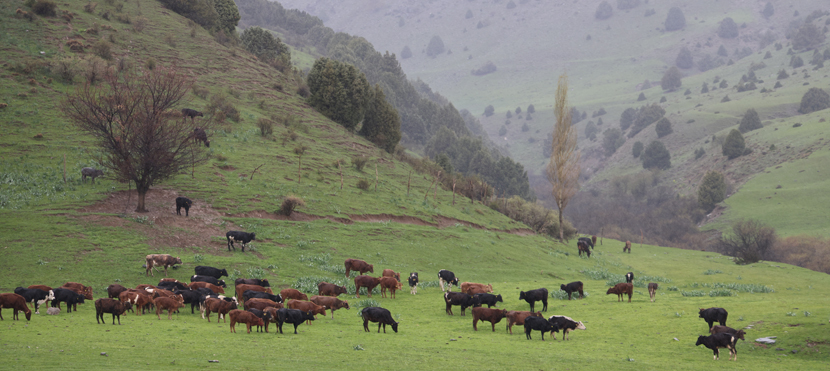
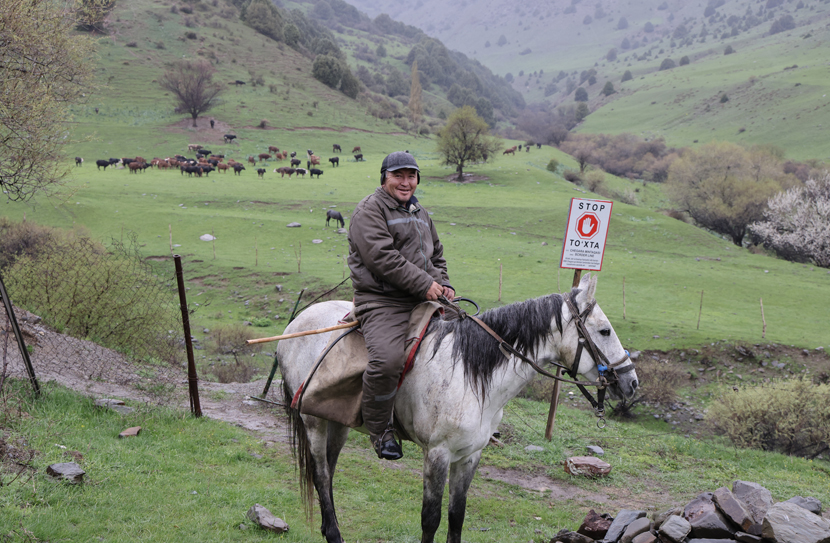
Another important focus of the visit was to explore prospects for piloting Ice Stupa technology—an artificial glacier system—in Bakhmal district. The delegation conducted site observations in a number of mountainous locations, engaged with local residents, and inspected sites that could help mitigate water scarcity. According to experts, water generated from the melting of artificial glaciers could help supply orchards, household plots and other agricultural land during early spring and the vegetation period. This could, in particular, support local livelihoods and the sustainability of agriculture in areas where water demand increases at the beginning of the season.
During the discussions, it was also noted that the implementation of such initiatives should take into account the needs of women, especially those engaged in household plots, horticulture and small greenhouse activities. This could help strengthen the climate resilience of local communities while also supporting women’s livelihood opportunities in rural areas.
At the conclusion of the visit, views were exchanged on continuing detailed technical assessments, strengthening cooperation with local communities, and gradually shaping initiatives aimed at promoting climate-resilient horticulture and innovative water-saving solutions in Bakhmal district.









 16/02/2026