Under conditions of accelerating global changes and persistent external uncertainty, the resilience of the financial system is becoming crucial for economic development. In Uzbekistan, reforms in the banking and financial sectors are being implemented within the framework of the Development Strategy until 2030 and are aimed at ensuring macroeconomic stability, advancing digitalization, attracting investments, and strengthening trust in financial institutions.
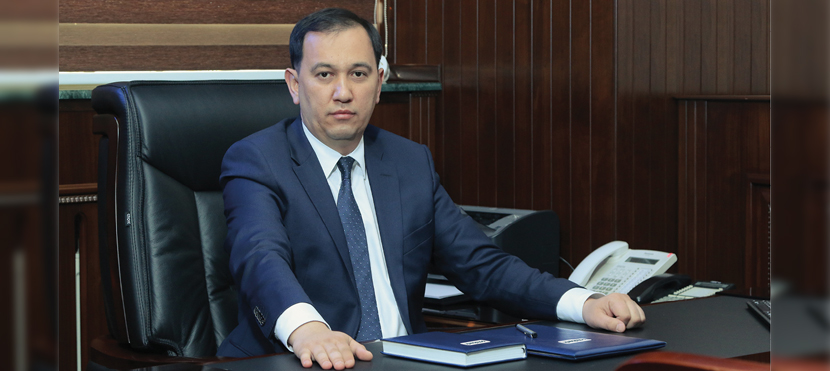
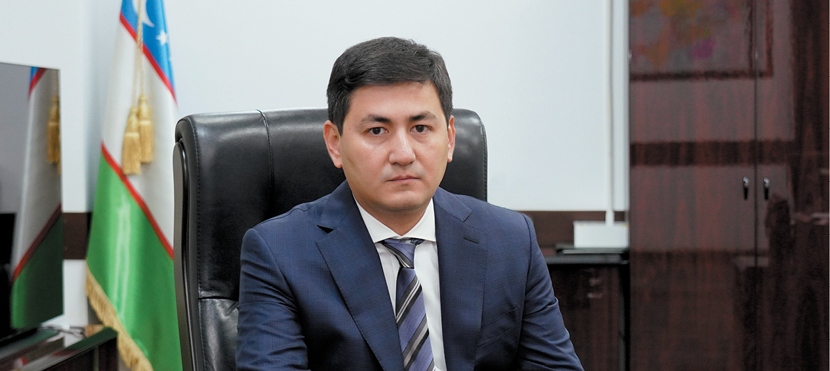
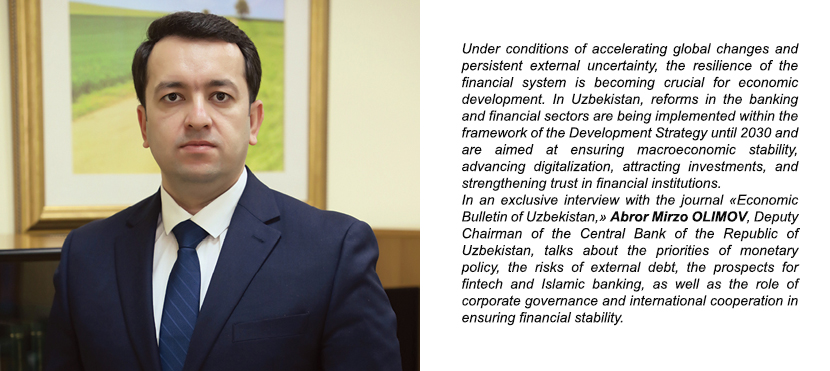
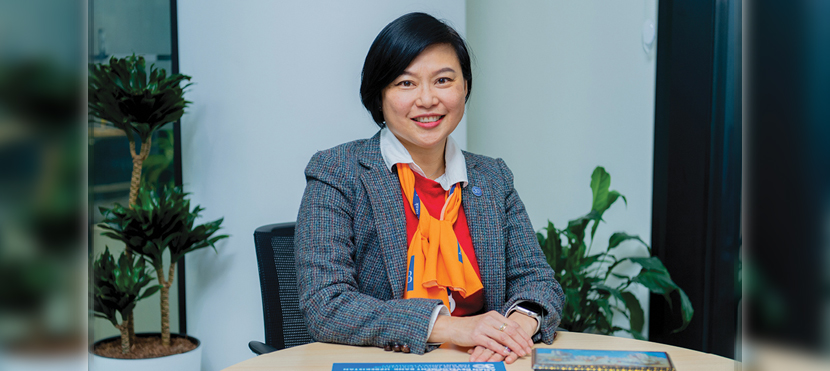
In an exclusive interview with the journal «Economic Bulletin of Uzbekistan,» Abror Mirzo OLIMOV, Deputy Chairman of the Central Bank of the Republic of Uzbekistan, talks about the priorities of monetary policy, the risks of external debt, the prospects for fintech and Islamic banking, as well as the role of corporate governance and international cooperation in ensuring financial stability.
– Abror Mirzo Mukhammadkosimovich In the “Uzbekistan Development Strategy until 2030” adopted by the President of the Republic of Uzbekistan, the transformation of the financial market is identified as one of the main directions of reforms. What priority goals has the Central Bank set for the next 3-5 years, and which results achieved so far in reshaping the financial system do you consider important?
– The Central Bank has set clear and medium-term priority goals aimed at fundamentally renewing the financial system over the next 3-5 years. At the center of these goals is the task of transforming the financial system from traditional banking activities to a digital, innovative, and ecosystem-based model. Particularly, for the years 2026-2030, it is a priority to establish a competitive fintech ecosystem in the country integrated with international financial markets, attract significant foreign investments in the field of financial technologies, increase the number of market participants and startups, and train highly qualified personnel. Along with the main tasks of the Central Bank, such as maintaining the stability of prices and the financial system, these goals are aimed at supporting innovation, making the regulatory environment more transparent, and strengthening open dialogue with market participants.
The decree of the President of the Republic of Uzbekistan dated November 27, 2025, No. PQ-359, ‘On Measures to Further Develop the Financial Technology Sector in Uzbekistan,’ which sets specific goals for 2026-2030 and mechanisms for their implementation, demonstrates that state policy has taken on a systematic and coherent nature. At the same time, the cooperation established with the “Global Finance and Technology Network” community under the Central Bank of Singapore has created an important institutional basis for applying international experience and advanced knowledge to the national financial system. These factors indicate that new qualitative indicators, such as data-based management, transparency, and adaptability to innovations, are emerging in the financial system.
– In the context of ongoing reforms, attracting domestic and foreign investments is of great importance. Which areas of the financial market do you consider to have the highest investment potential for today?
– In the context of ongoing reforms, it can be observed that the banking sector holds a leading position as the most active and large participant in attracting foreign investments.
Most particularly, it is explained by the increased activity of banks in financing investment as well as small business and entrepreneurial projects using foreign capital.
Actually, in 2025, more than 3,000 projects in the economy’s industry, services, trade and public catering, construction, agriculture, and transport-communication sectors were financed by banks using 6.6 billion US Dollars of resources attracted from external sources.
– According to recently announced data, Uzbekistan’s external debt is around 68.4 billion, US Dollars and the growth of corporate debt is causing concern. What risks could this pose to financial stability, and what measures is the Central Bank taking in this regard?
– Over the years, the implementation of structural reforms, modern modernization processes, programs aimed at socio-economic development of regions, and infrastructure renewal have ensured the sustainable growth of Uzbekistan’s economy. These processes are being financed not only through domestic means but also through foreign investments.
In the past five years, the active attraction of loan funds from external sources has corresponded proportionally to the economic growth rates. As a result, as of October 1, 2025, the total external debt amounted to 75.4 billion dollars, of which 37.4 billion dollars was state external debt and 38 billion dollars was corporate external debt (68.4 billion dollars as of April 1, 2025).
It should be noted that Uzbekistan’s indicators regarding external debt burden are at a reasonable level compared to neighboring countries (53 percent of GDP).
Regarding corporate external debt, this debt structure includes funds borrowed by the private sector, including business entities, without state guarantees, and payments on this debt are made from the companies’ own resources, meaning that state budget funds are not used.
Corporate debt is mainly aimed at financing economic projects, creating and expanding infrastructure, supplying enterprises with working capital, and financially supporting employment and entrepreneurial activity.
The portion of corporate external debt attributable to banks is directed within the scope of their core activities to refinance business entities in the fields of construction, industry, services, and agriculture.
Furthermore, large projects in renewable energy are being implemented across the country on the basis of public-private partnerships. For example, work is being carried out with foreign investments together with companies such as Saudi Arabia’s ACWA POWER, the United Arab Emirates’ MASDAR, Turkey’s Aksa Energy, France’s Total Eren SA, the Netherlands’ Stone City Energy, and China’s China Gezhouba Group Overseas Investment Co. LTD.
In order to attract corporate debt and continuously analyze the risks it may pose, the Ministry of Economy and Finance, the Central Bank, and other interested ministries and agencies have jointly developed a ‘system for assessing risks in attracting bank credit and external debt by large enterprises of systemic importance for the Uzbek economy.’ In this regard, Resolution No. 670 of the Cabinet of Ministers was adopted on October 24, 2025.
It is also planned to establish a coordinating commission for risk management related to large enterprises (with the participation of the Ministry of Economy and Finance, the Central Bank and the heads of a number of ministries and departments) from January 1, 2026. Now, the attraction of debt funds by large debtors of systemic importance will be periodically monitored.
In general, we do not consider that there are any risks associated with the growth of corporate external debt today. In particular, drawing conclusions based only on the nominal growth rate of corporate external debt leads to a one-sided assessment of the situation. In this case, a more complete assessment of the situation can be made by analyzing the extent to which external debt supports economic growth and the effectiveness of its use.
In order to ensure the continuity of credit allocation, the attraction of additional resources, including external financial funds, is a natural process. At the same time, the increase in the volume of external financing by non-financial enterprises is explained by the improvement in the country’s investment attractiveness, the effectiveness of state reforms to develop entrepreneurship, and growing investor confidence in financial stability.Jalb etilgan tashqi moliyaviy resurslardan samarali va maqsadli foydalanish hisobiga ishlab chiqarish quvvatlarining kengayishi hamda xizmat ko ‘rsatish sohasining rivojlanishi mamlakat iqtisodiyotining o‘sishiga bevosita ijobiy ta’sir ko‘rsatadi.
– What areas of Central Bank policy are affected by the increase in the volume of transfers to the borders? How can they affect the foreign exchange market?
– The steady growth in the volume of international money transfers is first of all directly influenced by the Central Bank’s policy aimed at ensuring macroeconomic stability, expanding financial inclusion, and integrating the incomes of the population into the formal financial system.
The dynamics of recent years show that the volume of international money transfers has maintained a consistent growth trend. In particular, while money transfers received by the country amounted to 11.4 billion US Dollars in 2023, this figure rose to nearly 19 billion US Dollars in 2025. Moreover, the positive balance between incoming and outgoing money transfers has also been increasing year by year. This indicator was 9.1 billion US Dollars in 2023 and reached 16.2 billion US Dollars in 2025.
The increase in the balance of money transfers supports household consumption, stimulates domestic demand and economic activity, and contributes to the formation of additional financial resources for investment processes through the banking system. This, in turn, expands the Central Bank’s opportunities to effectively implement its monetary policy instruments.
The growth in the volume of money transfers increases the supply of foreign currency in the foreign exchange market, exerting a balancing effect on the exchange rate. In some cases, this can directly influence the strengthening of the som. Actually, international money transfers are an important factor supporting external stability and help maintain stability in the currency market.
– What is the strategic approach of the Central Bank to bring the inflation rate to the target rate in the context of global and domestic inflation risks?
– Since 2020, the Central Bank of the Republic of Uzbekistan has been conducting monetary policy within the framework of an inflation-targeting regime. The Central Bank has set a permanent inflation target of 5 percent in its monetary policy and uses all available instruments to achieve this target (firstly, our main instrument is the key interest rate) and takes necessary measures.





 16/02/2026