A delegation of the Food and Agriculture Organization of the United Nations (FAO) in Uzbekistan visited the Research Institute of Rainfed Agriculture in Gallaorol district, Jizzakh region, to explore opportunities for scientific cooperation in support of climate-resilient agriculture.
The delegation, led by Assistant FAO Representative in Uzbekistan Sherzod Umarov, met with the Director of the Institute, Bunyod Mamarakhimov. During the visit, the delegation was introduced to the Institute’s scientific activities, its achievements in crop breeding, and modern approaches and technologies applied in rainfed farming systems.
The Institute’s long-standing scientific heritage was also highlighted. Its history dates back to 1913, when the Zarafshan experimental field was established near Kattakurgan in Samarkand region. Over the years, the institution has developed into one of the leading research centres in the field of rainfed agriculture.
Special attention was given to ongoing research aimed at developing drought-tolerant crop varieties, increasing productivity, and introducing climate-adaptive technologies. The Institute’s scientific and practical experience plays an important role in strengthening agricultural production in rainfed areas and contributing to food security.
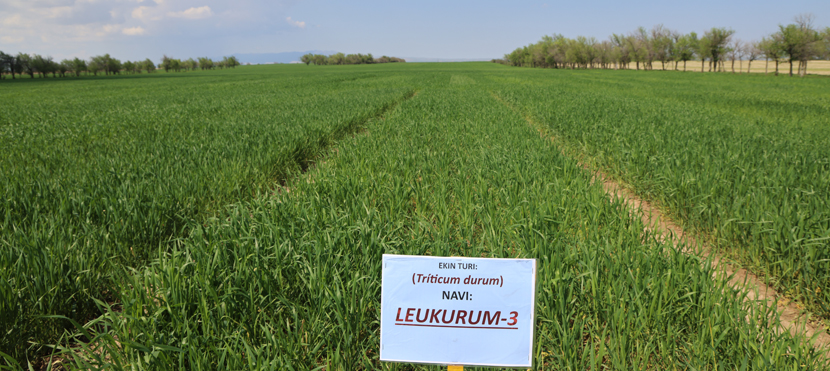
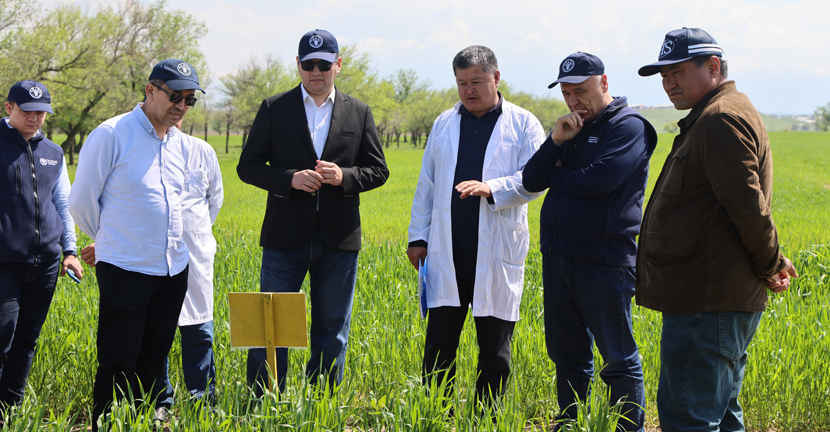
During a visit to the Institute’s experimental fields, the delegation became acquainted with new varieties of wheat, barley, safflower and chickpea developed through advanced breeding work. According to specialists, these varieties are valuable not only for their high productivity, but also for their adaptability to changing climatic conditions and resilience to prolonged dry periods. These characteristics make them relevant not only for Uzbekistan, but also for other countries of Central Asia facing increasing water scarcity and heat stress.
The delegation also reviewed the Institute’s material and technical facilities, including field trials, modern seed production systems, high-capacity seed cleaning and sorting equipment, and advanced agricultural machinery. Particular interest was shown in soil-conserving and resource-efficient farming practices introduced by the Institute, including no-till planting, crop rotation systems and approaches to optimizing water use.
During the meeting, the parties discussed prospects for testing soil-protective and resource-efficient agricultural practices under rainfed conditions, demonstrating rainwater harvesting technologies, and advancing research on biopesticides. The visit provided an important platform for strengthening cooperation between science, innovation and international partners in support of climate-resilient agriculture.
The parties also emphasized the importance of ensuring that scientific developments and climate-adaptive solutions take into account the needs of women and youth. This is particularly relevant for expanding access to knowledge, innovation and practical solutions in rainfed rural areas.










 16/02/2026