The Food and Agriculture Organization of the United Nations (FAO) has established three Farmer Field Schools in the Fergana Valley to strengthen the practical knowledge and skills of farmers and household plot owners in sustainable agricultural production under changing climatic conditions.
The Farmer Field Schools operate in Kurgantepa district of Andijan region, Namangan district of Namangan region and Fergana district of Fergana region. Each school was designed to reflect the needs of local producers and the agricultural profile of its respective area. Training in Andijan focuses on potato production, the school in Namangan specializes in resource-efficient greenhouse management, while practical activities in Fergana are dedicated to raspberry cultivation.
The initiative is being implemented under the regional project “South-South and Triangular Cooperation for Sustainable Agricultural Development in the Fergana Valley” (UNUN/SEC/028/UND), carried out by the FAO Representation in Uzbekistan in cooperation with Tashkent State Agrarian University. The project brings together regions of Uzbekistan, Kyrgyzstan and Tajikistan located within the Fergana Valley.
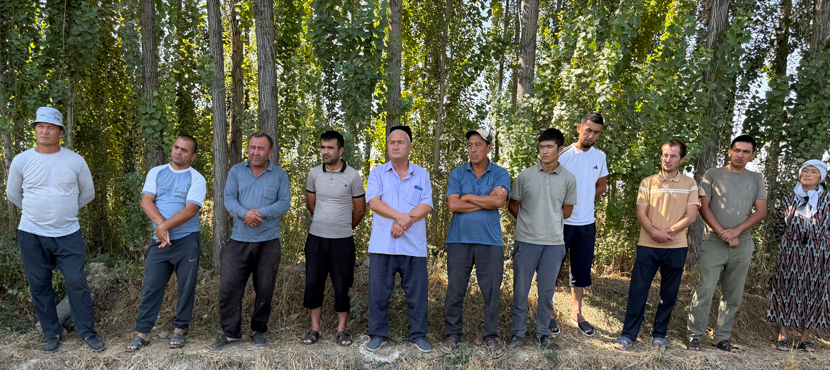
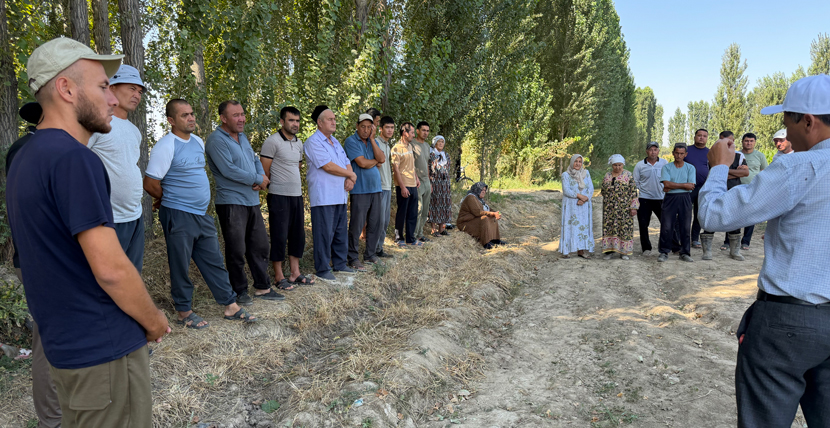
At the Farmer Field Schools, participants do more than listen to ready-made recommendations. Throughout the growing season, they observe crops directly in the field, analyse challenges together with specialists, test different solutions and learn to make independent decisions based on the results. This approach enables them to adapt theoretical knowledge to local soil, climate and production conditions.
“The principal strength of a Farmer Field School is that farmers are not simply recipients of knowledge; they become active participants in the learning process. They observe their crops, analyse the causes of problems, test solutions and select the most appropriate options for their farms. This helps accelerate the practical application of new knowledge,” said Project Coordinator Muhammadjon Qosimov.
At the Farmer Field School in Kurgantepa district, participants studied potato nutrition and crop management, soil cultivation, monitoring of plant growth stages, and integrated measures for managing diseases and pests. During the training, farmers also discussed challenges encountered in their own fields. In particular, participants examined the poor emergence of some seed potato tubers, analysed the possible causes and received recommendations on appropriate follow-up agronomic measures.
“In the past, when a problem appeared in a crop, we often took action without fully understanding its cause. At the Farmer Field School, we are learning to observe the condition of the plants, analyse the soil and nutrition conditions, and only then make a decision. Most importantly, we can test the recommendations in our own fields and see the results directly,” said Z. Saydaliev, Chairperson of the Navbahor Mahalla Citizens’ Assembly in Kurgantepa district.
At the Farmer Field School established in Beshkapa mahalla of Namangan district, participants learned how to prepare greenhouses and seedbeds for seasonal planting, meet soil requirements, carry out disinfection and arrange crops correctly. Particular attention was also given to the regular monitoring and recording of key indicators such as air and soil temperature and moisture levels. Such information enables producers to use water, fertilizers and other resources efficiently and make timely crop-management decisions.
Training conducted at the AL-VODILIY raspberry cluster in Sanoat mahalla of Fergana district covered the main stages of raspberry cultivation. Participants received practical recommendations on determining the nutrient requirements of plants, applying fertilizers correctly, training and pruning raspberry plants, and regularly monitoring diseases and pests. Specialists also explained the principles of combining biological, physical and chemical pest-management methods.
Learning through the Farmer Field Schools is not limited to one-off training sessions. From planting through to harvest – following a “seed-to-seed” approach – participants continue to monitor crops, record changes, compare results and test new practices. The process also creates a platform for regular knowledge exchange among farmers, researchers and agricultural specialists.
This approach helps farmers prepare more effectively for climate-related risks, use land, water and other production resources efficiently, and identify solutions suited to local conditions. The practical experience generated through the Farmer Field Schools could support the wider adoption of climate-adaptive and sustainable agricultural practices in other parts of the Fergana Valley.



















 16/02/2026