Извините, этот техт доступен только в “English”. For the sake of viewer convenience, the content is shown below in the alternative language. You may click the link to switch the active language.
World Metrology Day provides an important opportunity to reflect on the role of measurements in the modern world – from fundamental research to industrial production, international trade, and the protection of societal interests. Since the signing of the Metre Convention in 1875, a unified system of measurements has become an essential foundation of scientific and technological progress, ensuring the comparability of results and trust between countries. Notably, the Metre Convention remains one of the few international agreements that has preserved its relevance and practical significance for more than 150 years, confirming the fundamental role of metrology in shaping the global scientific and economic landscape.
The 2025 theme – “Measurements for all times, for all people” – highlighted the universal nature of metrology and its importance for sustainable development. In 2026, this idea is further developed through the theme “Metrology: Building Trust in Policy Making”, emphasizing the growing role of measurements as a basis for informed decision-making. This continuity reflects the evolution of metrology — from ensuring universal applicability of measurements to serving as a key enabler of trust in governance, regulation, and international cooperation.
The current international metrology agenda is shaped through close collaboration between the International Bureau of Weights and Measures (BIPM) and the International Organization of Legal Metrology (OIML) and encompasses a wide range of interrelated priorities. Alongside the development and practical implementation of the International System of Units (SI), significant attention is given to ensuring the comparability of measurements, strengthening the global metrology infrastructure, advancing digital approaches, and expanding the participation of countries in the international metrology system.
Key priorities include the development of digital approaches in metrology, including harmonized principles for data representation and exchange, ensuring data interoperability, and enhancing trust in measurement results within digital environments. These developments are considered within the broader context of the quality infrastructure, integrating metrology, standardization, accreditation, and conformity assessment.
At the same time, quantum metrology continues to advance as a field associated with the use of quantum phenomena for the realization of units and the improvement of measurement accuracy. This area forms a foundation for the long-term evolution of the national measurement standards and the resilience of national metrology systems.
International comparisons conducted under the CIPM Mutual Recognition Arrangement (CIPM MRA) remain a key mechanism for building trust. They ensure the equivalence of national measurement standards and calibration and measurement capabilities and provide the basis for mutual recognition. More broadly, comparisons serve as an important tool for fostering confidence, facilitating international trade, and reducing technical barriers, in line with the principles of the WTO Agreement on Technical Barriers to Trade.
Legal metrology plays a crucial role in the practical implementation of measurement reliability. The activities of the International Organization of Legal Metrology are aimed at harmonizing requirements for measuring instruments and conformity assessment procedures. The application of OIML Recommendations support mutual recognition of results, facilitates market access, and ensures consumer protection. Particular attention is also given to the development of digital approaches in legal metrology and to maintaining trust in data.
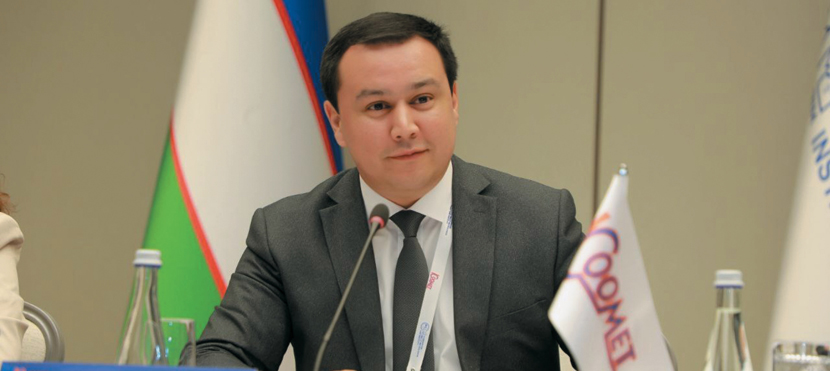
At the regional level, the Euro-Asian Cooperation of National Metrological Institutions (COOMET) plays a significant role. Ongoing efforts within COOMET are focused on transforming cooperation, improving the efficiency of interaction, developing modern forms of scientific and technical collaboration, engaging new institutions, and harmonizing approaches.
These activities contribute to strengthening technical competence and enhancing the role of the region within the global metrology system.
The development of scientific and human capacity remains a key priority. Collaboration with research institutions supports the advancement of methodologies and the application of scientific results in practice, while cooperation with educational institutions contributes to the training of qualified specialists and fosters interest in metrology among younger generations. This ensures sustainability and continuity in the development of the field.
The practical application of metrology is supported by secondary calibration and testing laboratories, which directly interact with industry, maintain measurement accuracy, and ensure the safety and quality of products. Their development is an essential element of the national quality infrastructure and consumer protection.
The growing participation of countries in the international metrology system reflects positive progress. The Republic of Armenia has become a Corresponding Member of the International Organization of Legal Metrology, and Uzbekistan has attained the status of a Member State of the Metre Convention. These developments reflect increasing confidence in national metrology systems and their deeper integration into the global metrology community.
In Uzbekistan, the development of metrology is recognized as an important component of state policy and ongoing reforms. The modernization of infrastructure, the development of the national measurement standards, and the implementation of modern approaches to ensuring measurement traceability are not only aligned with the priorities of the “Uzbekistan–2030” Strategy – which aims at sustainable economic growth, human capital development, and improved governance – but also serve as practical instruments for achieving these objectives. Reliable and comparable measurements provide a foundation for improving product quality, fostering industrial development, strengthening export potential, and enhancing trust in the national economy.
The development of the national measurement standards and the establishment of the Quantum Metrology Center “Quantum-M” create new opportunities for positioning Uzbekistan as a modern scientific and technological hub and a regional center of competence in metrology. These efforts contribute to strengthening measurement traceability, advancing scientific capabilities, and facilitating the adoption of innovative technologies. In a broader context, they also support a more comprehensive contribution of metrology to the achievement of the United Nations Sustainable Development Goals, demonstrating that reliable and comparable measurements are essential for addressing challenges in environmental protection, healthcare, energy, and sustainable industrial development. The dissemination of such approaches and best practices enables metrology to serve as an important tool for achieving these goals both nationally and globally.
World Metrology Day unites the global metrology community around the shared values of accuracy, reliability, and mutual recognition. On this occasion, sincere appreciation is extended to all professionals whose work underpins scientific progress and trust in society. May the continued advancement of metrology be accompanied by new achievements, strengthened international cooperation, and confident progress toward a sustainable future.
Happy World Metrology Day!
Lazizbek SAIDORIPOV,
COOMET President, First Deputy Director, Uzbek Agency for Technical Regulation






 18/02/2026