Tashkent, Uzbekistan, 10 November 2026
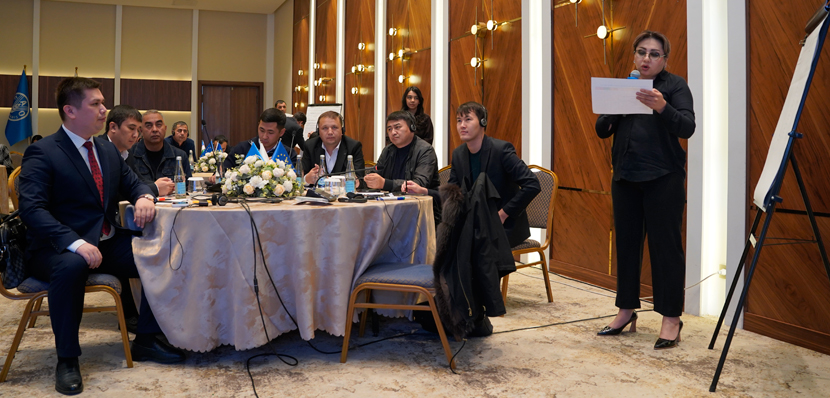
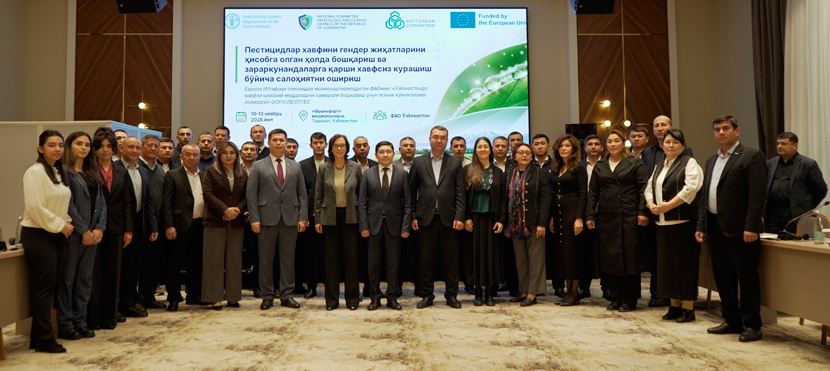
The Food and Agriculture Organization of the United Nations (FAO) has launched a four-day training to raise national awareness on pesticide risks and explore how inequalities between rural women and men create different vulnerabilities and affect farmers’ ability to respond to pesticide exposure. Held in Tashkent in collaboration with the Secretariat of the Rotterdam Convention, the training is supported by a European Union-funded project. Taking place from 10 to 13 November 2026, it brings together around 45 participants from the National Committee on Ecology and Climate Change, the Ministry of Agriculture, the Food Safety Committee, the Ministry of Water Resources, the Ministry of Health, agricultural extension specialists, universities, research institutes and the private sector.
Women and men have different roles in pesticide management and unequal access to safety information and training. These differences can affect their capacity to respond to pesticide exposure and handle health risks. According to FAO’s 2025 national gender profile of agriculture, women account for over 43 percent of Uzbekistan’s agricultural workforce, yet more than 93 percent of agricultural land is controlled by men, and men are estimated to receive agricultural advisory support about twice as often as women. An FAO study in Azerbaijan, Kyrgyzstan, Tajikistan and Türkiye found that pesticide application decisions are mostly made by men, but women and children are also exposed, and that a lack of personal protective equipment is widespread among both women and men. Pesticide-safety information delivered through conventional extension channels may therefore fail to reach women who handle pesticides, work in treated fields or wash potentially contaminated work clothes.
The training is designed to help participants take these differences into account when working with farmers and rural communities, in line with the Ministry of Agriculture’s Gender Strategy 2025–2030, developed with FAO technical support. The programme highlights findings from the FAO policy brief on gender dynamics in pesticide use and management in Central Asia and Türkiye and introduces FAO’s approach to gender-responsive pesticide risk management. Participants will review the project’s trial results with biopesticides and the experience of farmer field schools in promoting integrated pest management. They will also explore gender inequalities in pesticide management, safety measures, safer alternatives and policies that address the health and safety of both women and men.
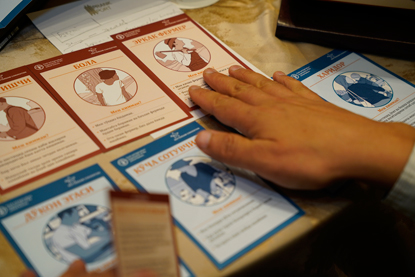
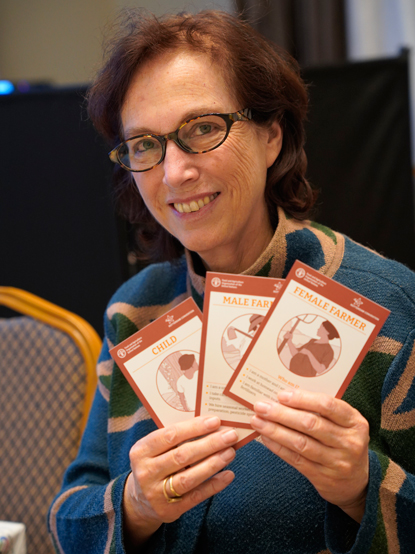
Participants will use the role-playing exercise “Acting Against Risks”, an FAO tool that helps communities identify gender-related pesticide risks and possible solutions. They will first practise using the tool in group sessions to learn key concepts and facilitation skills, then apply it with farmers during a one-day field visit to a community in Pakhtakor district of Jizzakh region. Afterwards, they will discuss the challenges encountered in the community, identify ways to include the approach in national activities and explore its use in extension services, farmer training, farmer field schools and university education. Participants’ recommendations will inform the relevant priority actions of the National Action Plan.
The training is intended to prepare participants to facilitate pesticide-safety sessions with farmers and rural communities, taking account of gender-related roles, constraints and ways people are exposed to pesticides.
“Women and men are not equally exposed to pesticide risks and reducing pesticide risks means ensuring that access to information, training and services reaches everyone who works in agriculture,” said Nadia Correale and Flavia Grassi from FAO headquarters, who are facilitating the training.
The European Union-funded FAO project “Technical Assistance for Sound Management of Hazardous Chemicals” is a EUR 3.9 million initiative to reduce environmental degradation in Uzbekistan by improving pesticide management, strengthening chemicals governance and promoting sustainable agricultural practices.










 16/02/2026