Tashkent, Uzbekistan — 26 October 2026
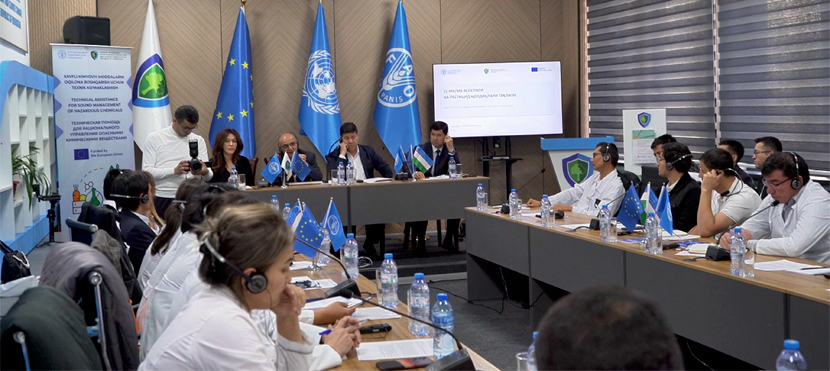
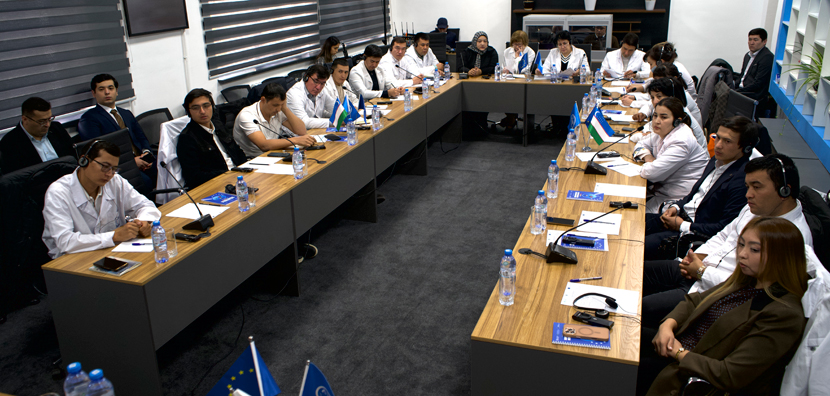
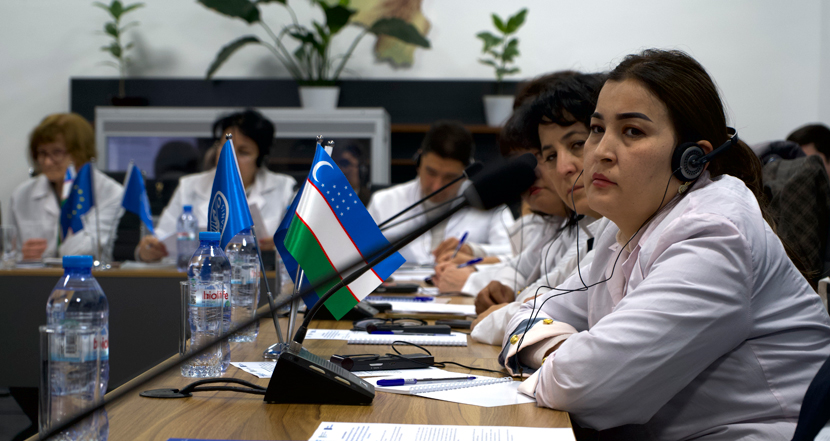
The Food and Agriculture Organization of the United Nations (FAO), through the European Union-funded project “Technical Assistance for Sound Management of Hazardous Chemicals,” has launched the third phase of specialized laboratory training in Tashkent. Running from 26 to 29 October 2026 at the premises of the National Center on Environmental Monitoring (NCEM), the training is delivered by international laboratory specialist Mohammad Nazem Shirazi and focuses on the theory and practical operation of Liquid Chromatography-Tandem Mass Spectrometry (LC–MS/MS) — an advanced analytical system recently installed at NCEM — for pesticide residue analysis. The training brings together laboratory specialists from NCEM, Regional Departments of Ecology and Climate Change from Fergana, Samarkand, Tashkent, Karakalpakistan, Surkhandarya and Navoiy, as well as the Republican Centre for Agrochemical Analysis and the Waste Management and Circular Economy Development Agency.
Reliable pesticide residue analysis is essential for detecting pesticide contamination in environmental samples, informing regulatory decisions and protecting public health. Strengthening staff capacity to operate advanced analytical instruments supports Uzbekistan’s environmental monitoring system and the production of reliable, traceable analytical results.
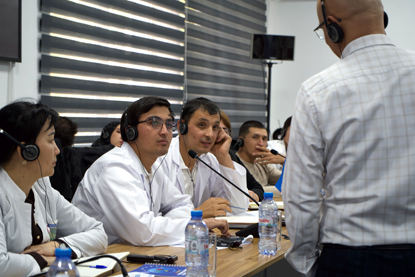
This phase builds on the quality management and chemical safety training delivered in June and August 2026. The four-day programme covers instrument familiarization, method development and calibration, quantitative data processing and result interpretation, quality assurance and quality control in line with ISO/IEC 17025:2017, troubleshooting and preventive maintenance. Classroom sessions are complemented by practical laboratory exercises, subject to instrument readiness and the availability of suitable standards, reagents and consumables. The training also provides an opportunity to assess the system’s operational readiness and identify technical needs for follow-up.
The training is expected to strengthen the practical skills of participants in operating the LC–MS/MS system, carrying out pesticide residue analysis and applying quality assurance, quality control and data review procedures. Further supervised practice and technical follow-up will support participants in consolidating these skills, contributing to stronger environmental monitoring capacities across the country’s network of laboratories and agencies.
“Advanced equipment delivers value when laboratory staff can use it confidently and produce reliable results. This training connects instrument operation with quality assurance, helping turn analytical data into sound environmental decisions,” said Mohammad Hossein Nazem Shirazi, International Laboratory Specialist.
“Strengthening our laboratory’s analytical capacity is a priority for the National Center on Environmental Monitoring. The introduction of LC–MS/MS technology and the training of our staff in its operation represent an important step toward generating reliable, internationally recognized data on pesticide residues in environmental samples. This will enhance our ability to fulfil our mandate in environmental monitoring and contribute to informed decision-making on chemicals management in Uzbekistan,” said Mr. Rustam Ergashev, Director of the National Center on Environmental Monitoring.
The EU-funded FAO project “Technical Assistance for Sound Management of Hazardous Chemicals” is a EUR 3.9 million initiative aimed at reducing environmental degradation in Uzbekistan through improved pesticide management, strengthened chemicals governance, and the promotion of sustainable agricultural practices.







 16/02/2026